

Janitorial Services
What’s Included in Professional Janitorial Services? A Complete Breakdown
Apr 4th, 2026
Janitorial Services

A janitorial cleaning plan sets out which rooms we clean, what we do in each one, and when we visit. It should also explain which jobs need a separate appointment, such as carpet extraction or floor refinishing. That detail helps you compare proposals and know what to expect after each visit.
Our janitorial services include recurring room cleaning, floor care, restroom cleaning, and trash and recycling management. We schedule a walkthrough with new clients to review the space and build the task list around how the business uses it.
Routine work can include vacuuming entrance mats, sweeping and mopping hard floors, wiping accessible surfaces, and removing marks from interior glass. Reception counters, waiting-area tables, and shared seating need attention according to their materials and use.
Busy entrances may need attention during the day as well as after closing. During planning, we review foot traffic and the times visitors arrive so those tasks fit the building’s schedule.
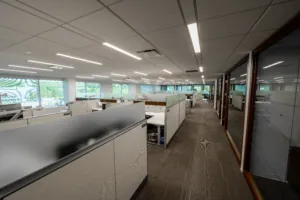
Office cleaning can cover accessible desks and tables, floors, bins, and agreed touchpoints. Personal belongings, paperwork, and sensitive equipment need clear handling instructions. Having staff clear work surfaces before a scheduled visit gives us access without moving their documents.
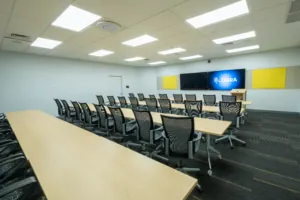
Meeting rooms may have shorter windows for cleaning. To schedule cleaning between meetings, we review gaps between bookings and which rooms need attention before clients arrive. The room list can distinguish everyday cleaning from periodic work on chair upholstery or interior glass.
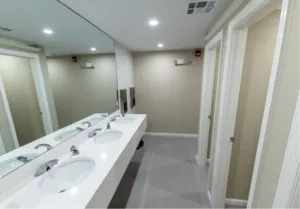
A restroom task list can include toilets, urinals, sinks, counters, mirrors, floors, and bins. Door handles, faucets, and other frequently touched surfaces should be named in the plan rather than left under a general instruction to clean the room.
Supply checks need their own agreement. Before service begins, we clarify who buys soap and paper products, where they are stored, and whether our visits include restocking. Buildings with frequent visitors may also need daytime restroom checks.
Counters, tables, sinks, appliance exteriors, and floors are common tasks. Microwave interiors, refrigerators, and cupboards need a more specific arrangement. We discuss access and how staff will remove food or belongings before that work is scheduled.
Food waste and spills can change how often a break room needs attention. Its schedule does not have to match a private office that sees much less activity.
The plan should identify which bins we empty, whether liners are replaced, and where collected waste goes. Building collection times and access to storage areas also matter. Paperwork intended for secure disposal needs separate instructions so it is not mistaken for ordinary recycling.
Vacuuming, sweeping, and mopping can form part of regular visits. Carpet extraction, buffing, waxing, stripping, and sealing are different jobs, selected for the floor material and condition. These may require another appointment and time before the area can be used again.
Our work at Leviton’s Melville headquarters included daytime and nighttime cleaning, floor care, dusting, glass cleaning, and trash removal. Our Melville cleaning services page explains how daytime support, overnight cleaning, and periodic floor care can be coordinated for a local office building.
A written plan should identify the rooms, tasks, visit frequency, and access arrangements. It should also name the contact for missed items or changes to the building’s use. Deep cleans and special projects can then be priced with their own task lists.
For a proposal that reflects your building, get a quote for janitorial services. Your location, room layout, and preferred cleaning hours help us prepare for the conversation.